| CANADIAN ARMED FORCES |
| KANADSKE ORUŽANE SNAGE |


| FORCE MOBILE COMMAND KOMANDA KOPNENIH SNAGA | ||
|
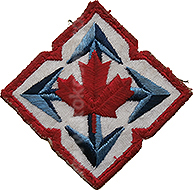
Komanda kanadskih kopnenih snaga je nasljednik Kanadske vojske, što je bilo ime kopnene vojske od 1940 pa do početka 1968. godine, kada je izvršena reorganizacija. U vrijeme ujedinjavanja svih rodova, sve kopnene snage su stavljene pod jednu komandu Mobile command, koja je kasnije preimenovana u Mobilnu komandu kopnenih snaga Force Mobile Command. (1975.g. su izdvojene zračne snage pod Zračnu komandu). Novom reorganizacijom kanadskih oružanih snaga 1997. godine, naziv se mijenja u Komandu kopnene vojske koja je odgovorna za održavanje svih baza kopnene vojske u Kanadi, kao i za najveću komponentu rezervnih snaga - Rezervu kopnene vojske, često nazivanu i milicija ("militia"). |
||
 |
||
|
LFC is the descendant of the Canadian Army which was the name of Canada's land forces from 1940 until February 1, 1968. At the time of unification all army units were placed under Mobile Command (MC), later changed to Force Mobile Command (FMC) in 1975 when tactical air units were assigned to newly-created Air Command. The name was changed from FMC to Land Force Command in a 1997 reorganization of the Canadian Forces. Land Force Command (LFC) is responsible for army operations within the Canadian Forces. LFC maintains bases across Canada and is responsible for the largest component of the Canadian Forces Primary Reserve — the Army Reserve, often referred as the "militia". |
||
|
2nd CANADIAN MECHANIZED BRIGADE GROUP 2. KANADSKA GRUPA MEH. BRIGADA |
||
|
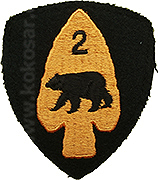
2. kanadska grupa mehaniziranih brigada je dio snaga u Centralnoj vojnoj oblasti. Trenutno su locirani u CFB Petawawa. Jedan je bataljon dislociran u Gagetown i pod komadom je Atlantske vojne oblasti. Inače se u sastavu nalaze 2. regimenta kanadskih kraljevskih artiljeraca; oklopni Kanadski kraljevski draguni; 2. borbena regimenta inžinjerije; jedna regimenta lake pješadije i dvije regimente mehanizirane pješadije; komanda i četa veze; Drugi servisni bataljon i Drugi vod Vojne poicije. Pridodani su im još i jedan taktički helikopterski skvadron (427-mi) te Druga poljska bolnica iz sastava Medicinske grupe kanadske vojske, koji iako nisu pod njihovom komandom usko surađuju sa njima. |
||
 |
||
|
Canadian Mechanized Brigade Group (2CMBG) is a Canadian Forces brigade group that is part of Land Forces Central Area of the Canadian army. It is currently based in CFB Petawawa. One of its three infantry battalions is under the administration of Land Force Atlantic Area and is stationed at CFB Gagetown. Units in this group are: 2nd Regiment, Royal Canadian Horse Artillery, The Royal Canadian Dragoons (Armoured), 2 Combat Engineer Regiment, 1st Battalion: The Royal Canadian Regiment (Mechanized infantry), 2nd Battalion: The Royal Canadian Regiment (Mechanized infantry) , 3rd Battalion: The Royal Canadian Regiment (Light infantry), 2 CMBG Headquarters & Signal Squadron, 2 Service Battalion, 2 Military Police Platoon. Two regular force units of other formations (427 Tactical Helicopter Squadron and 2 Field Ambulance of Canadian Forces Medical Group) are collocated with 2 CMBG at CFB Petawawa and work closely with the brigade group, but are not officially a part of it. |
||
|
4th CANADIAN MECHANIZED BRIGADE GROUP 4. KANADSKA GRUPA MEH. BRIGADA |
||
|
4. Kanadska mehanizirana grupa brigada (4CMBG) bila je stacionirana u Njemačkoj (u Lahr-u i Baden-Baden-u) do 1993. godine, kada su kanađani povukli sve svoje jedinice iz Njemačke. |
||
 |
|
|
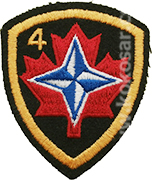
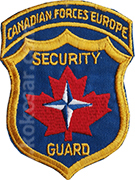
| 4th MECHANIZED GROUP PATCH | CAN. FORCES EUROPE SECURITY GUARD | |
| Oznaka za rukav 4. meh. grupe | Kanadske snage u Evropi osiguranje | |
|
4th Canadian Mechanized Brigade Group (4CMBG) was based in Lahr and Baden-Baden, Germany. This Brigade was disbanded around 1993 when Canada pulled all of their troops out of Germany. |
||
|
MILITARY POLICE VOJNA POLICIJA |
||
|
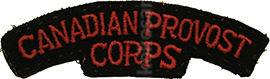
Stvoreni su u šestom mjesecu 1940. i stacionirani u Engleskoj (1 četa) uzeli su učešća u borbama u Francuskoj. Kroz centar za obuku (od 11. mj. 1942. do 05. mj. 1946) je prošlo 1897 polaznika svih činova. Kanadski su vojni policajci bili naoružani revolverima kalibra .38, koje su nosili u futroli na lijevom boku. I ostali "atributi" vojne policije su im bili isti kao i kod Britanaca. Provost korpus je prestao postojati 01. 02. 1968.godine (kao i ostale grane kanadske vojske) reorganizacijom oružanih snaga i njhovim ujedinjavanjem. |
||
 |
||
|
In mid June, 1940, the Canadian Provost Corps ( C Pro C ) was officially born. For the most part of 1940, 1 Pro Coy was stationed in England, but was involved in the battles surrounding the fall of France (Brest, Laval, Sable and Chateaubriant). The Canadian Provost Corps Training Center operated from November 1942 to May 1946, training 1897 all ranks. During WW2 most of the Canadian Army in England was stationed at Aldershot. Canadian "MP's" were armed with .38 revolvers carried in a holster on the left hip together with a pattern 1937 web belt, brace and brace attachment in the same manner as the British CMP. On the 1st of February, 1968 the Provost Corps ceased to exist, when all branches of the Canadian military were unified into the Canadian Armed Forces. |
||
 |
 |
 |
| CAP BADGE | SLEEVE PATCH | SLEEVE PATCH |
| Oznaka za kapu | Oznaka za rukav | Oznaka za rukav |
|
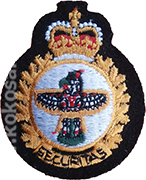
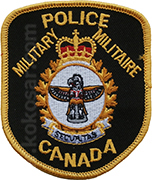
Ovu su oznaku, kao probnu nosili pripadnici Vojne policije zaduženi za osiguranje Štaba nacionalne obrane u Ottawi, sredinom osamdesetih godina 20. stoljeća. Znak nije odobren uz obrazloženje da izgleda previše civilno! Nešto je oznaka kasnije ipak napravljeno i prodavale su se u kao suveniri na baseball kapama u Školi za obavještajne djelatnosti i sigurnost Kanadske vojske. |
||
|
The patch was worn on a trial basis by Security Branch military police attached to the National Defence Headquarters (NDHQ) in Ottawa in the middle 1980's. The badge was however not approved as it looked to civilian. A number of these badges were later made into baseball cap souvenirs that were sold from the Canadian Forces School of Intelligence and Security. |
||
|
REGIMENTS REGIMENTE |
||
|
Tradicije oklopnih i pješadijskih regimenti su snažno ukorijenjene u tradicijama Britanske vojske. Mnoge regimente su proistekle iz regimenti Britanske vojske i još uvijek postoje čvrste veze među njima. Ostale su regimente nastajale samostalno, što je rezultiralo u raznolikosti i šarolikosti naziva. Tradicije britanske vojske se očituju i u Borbenim priznanjima kao i paradiranju (colours). Otprilike dvije trećine regularne vojske čine anglofonske, a jednu trećinu frankofonske jedinice. |
||
|
Canadian infantry and armoured regimental traditions are strongly rooted in the traditions and history of the British Army. Many regiments were patterned after regiments of the British Army, and a system of official "alliances", or affiliations, was created to perpetuate a sense of shared history. Other regiments developed independently, resulting in a mixture of both colourful and historically familiar names. Other traditions such as Battle Honours and Colours have been maintained by Canadian regiments as well. Approximately two thirds of the Regular Force is comprised of anglophone units, while one third is francophone. |
||
| 8th CANADIAN HUSSARS (PRINCESS LOUISE'S) 8. KANADSKA HUSARSKA REGIMENTA | ||
|
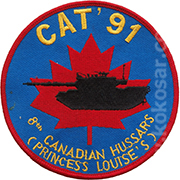
8. kanadska husarska regimenta (regimenta princeze Louise) je najstarija još postojeća oklopna regimenta Kanadske vojske. 1998. godine je iz ekonomskih razloga (nedostatak sredstava) pretvorena u rezervnu jedinicu. Formirana je 1848. kao Yeomanry konjička regimenta New Brunswck-a i to kao prva dobrovoljačka konjičak regimenta britanske sjeverne amerike. Princeze Louise je zato što je četvrta kćerka Nj. K. V. Viktorije Louisa bila pokrovitelj regimente, a to je ostala udavši se za škotskog vojvodu od Argylla. Moto ove jedinice je Albainn Gu-Brath što na Geliku (škotskom) znači Škotska zauvijek. To se u biti odnosi na duh brđana, škotskih ratnika koji nikada ne umire. Nadimak ove jedinice je "Luda osma". |
||
 |
|
|
| ARMY TROPHY '91 | ||
| Trofej Kopnene vojske osvojen 1991. g | ||
|
The 8th Canadian Hussars (Princess Louise’s) is the longest serving armoured regiment in the Canadian Army. In 1998 again due to budget reasons the Regular Squadron was disbanded and the regiment reverted to reserve status again. Originally founded as the New Brunswick Regiment of Yeomanry Cavalry in 1848 by the regimentation of a number of independent cavalry troops, the regiment was the first volunteer cavalry regiment in British North America. Her Royal Highness The Princess Louise was the fourth daughter of Her Majesty Queen Victoria. HRH was appointed Colonel-in-Chief of the Regiment on its formation and remained as such until her death in 1938. She began her association with the Argylls when she married the son of the Duke of Argyll. Unit motto Albainn Gu-Brath which is Gaelic for Scotland Forever. In essence, what this refers to is that the spirit of the Highland Warrior will never die. Unit's nickname is The Crazy Eights. |
||
| 22e ROYAL REGIMENT 22. KRALJEVSKA REGIMENTA | ||
|
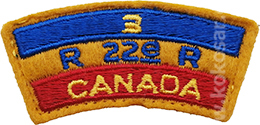
22. regimenta iz sastava 5. grupe mehaniziranih brigada je najpoznatija frankofonska jedinica Kanadske vojske. Sastoji se od tri bataljona, orkestra i dva rezervna bataljona što je čini najvećom regimentom Kanadske vojske. Ceremonijalno središte joj je u tvrđavi u gradu Quebecu, a tu je i muzej ove jedinice. Služe kao "lokalna" regimenta pokrajine Quebec. Nadimak ove jedinice je Van Doos što je iskrivljeno od francuskog vingt-deux (22). Moto jedinice je Je me souviens (Pamtim). Inače se imena regimenti u Kanadi službeno pišu na dvjezično Engleski i Francuski, osim u nekoliko izuzetaka za "stare" jedinice. I ako se za 22-u kraljevsku regimentu može naći i engleske nazive, to je, službeno neispravno, jer je samo francuska verzija službena. |
||
 |
||
| 3rd BATTALION 3. bataljon | ||
|
The Royal 22e Régiment is an infantry regiment from 5 Canadian Mechanized Brigade Group and the most famous francophone organization of the canadian Forces. The regiment comprises three Regular Force battalions, two primary Reserve battalions, and a band, making it the largest regiment in the Canadian Army. The ceremonial home of the regiment is La Citadelle in Quebec City, where the regimental museum is housed. The regiment is nicknamed the Van Doos, a corruption of vingt-deux, French for "twenty-two." The regiment serves as the "local" infantry regiment for Quebec. Units motto is Jee me souviens (I Remember). Most units of the Canadian Forces have official names in English and in French, but the historic regiments are exceptions, having monolingual names for the sake of tradition. The English name "Royal 22nd Regiment" is often seen, but strictly speaking is incorrect: only the French form is official. |
||
|
SPECIAL SERVICE FORCE JEDINICE SPECIJALNIH SNAGA |
||
|
1977. godine, Kanadska padobranska regimenta postaje dio novo organiziranih snaga Jedinica specijalnih snaga (Special Service Force (SSF), formacije jačine brigade, koja je bila mala, vrlo pokretljiva snaga za sve potrebe i koju je bilo lako i brzo uključiti u bilo koju nacionalnu ili međunarodnu operaciju. |
||
|
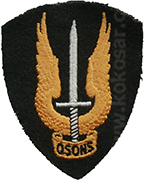
Brigadna oznaka je mač sa krilima, sličan onom koji su nosili pripadnici britanskog SAS-a (British Special Air Service). Postojale su verzije oznaka za službene uniforme (uključujući i bulion (vezenu)) te oznake za terenske uniforme i padobranske kombinezone. Uz to je postojala i verzija na zelenoj podlozi. |
||
 |
 |
|
| SPECIAL FORCES BRIGADE PATCH | PARACHUTE WINGS (before 1968) | |
| Brigaddna oznaka | Padobranska oznaka (prije 1968. god) | |
|
In 1977, the Canadian Airborne Regiment joined part of a new organization called the Special Service Force (SSF), a brigade-sized formation created to provide a small, highly mobile, general-purpose force that could be inserted quickly into any national or international theatre of operations. The role of the Special Service Force (SSF) is to provide general-purpose, combat-ready land forces in accordance with assigned tasks. |
||
|
The brigade's insignia was a winged dagger, similar to that worn by the British Special Air Service. Patches were made for the CF uniform (including bullion versions) and in subdued colours for the Garrison Jacket and Jump Smock, as well as in combat green. |
||
|
OTHER INSIGNIAS OSTALE OZNAKE |
||
 |
 |
|
| 1st CANADIAN DIVISIONAL PATCH | ||
| Oznaka 1. kanadske divizije | ||
 |
 |
 |
| NAVY TAB | NAVY TAB | AIR FORCE TECHNICIAN |
| Aviotehničar | ||
 |
 |
|
| ARMY TAB | ARMY TAB | |
 |
 |
 |
| SLEEVE PATCH | SLEEVE PATCH | SLEEVE PATCH |
ON TOP
 NA VRH