
| ROYAL CANADIAN DRAGONS |
| KRALJEVSKI KANADSKI DRAGONI |
|
|


|
Kraljevski kanadski dragoni su oklopna regimenta kao jedna od ti takve čine Kraljevski kanadski oklopni korpus. Oni su ujedno i najstarija konjička regimenta u Kanadi, budući su osnovani 21. 12. 1883. u 15. 03 minute(!) kao Konjički školski korpus, Zakonom o vojsci iz 1883. tada je osnovan i Pješadijski školski korpus iz kojega je nastalo sadašnja Kraljevska kanadska regimenta. 1887. godine preimenuju se u Kanadske dragone, a 1893. dobivaju i pridjev kraljevski (današnji počasni komandant je Nj.K.V. Princ Charles, Princ od Wallesa). Moto jedinice je Audax et Celer "Hrabro i brzo". |
|||
 |
 |
 |
|
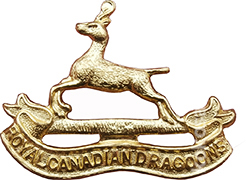
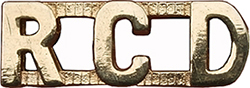
| CAP BADGE | RIGHT COLLAR BADGE | LEFT COLLAR BADGE | |
| Oznaka za kapu | Desna oznaka za rever | Lijeva oznake za rever | |
|
The Royal Canadian Dragoons (RCD) is an armoured regiment of the Canadian Army. It is one of three armoured regiments in the Regular Force and forms part of the Royal Canadian Armoured Corps. The colonel-in-chief of the RCD is HRH Prince Charles, Prince of Wales. The Royal Canadian Dragoons are the most senior regular cavalry regiment in Canada, having been formed on December 21, 1883, 3:03 pm, as the Cavalry School Corps, as a result of the Militia Act of 1883, which also created the Infantry School Corps (now The Royal Canadian Regiment). The Militia Act of 1883 emphasized the need for a fully-trained army to defend Canada, as its defences had been pierced during the Fenian raids. In 1887 it was renamed the Royal School of Cavalry. In 1892 the regiment was renamed as the Canadian Dragoons and in 1893 it became The Royal Canadian Dragoons. Motto is Audax et Celer (Bold and Swift). |
|||
 |
 |
 |
|
| SLEEVE INSIGNIA | SHOULDER INSIGNIA | SHOULDER INSIGNIA | |
| Oznaka za rukav | Oznaka za epoletu | Oznaka za epoletu | |
 |
 |
||
| BREAST NAME TAG | BREAST NAME TAG | ||
| Prsna oznaka sa prezimenom | Prsna oznaka sa prezimenom | ||
|
ABOUT REGIMENTAL INSIGNIA O OZNACI REGIMENTE |
|||
|
Oznaka regimente se sastoji od springboka (vrsta antilope) u trku preko zelene ravnice postavljene na traku, azurno plave boje na kojoj je zlatnim slovima ispisano Kraljevski kanadski dragoni (Royal Canadian Dragoons). Antilopa u skoku podsjeća na učešće regimente u ratu u Južnoj Africi. Legenda kaže da se Drugom burskom ratu (1899–1902), prilikom napredovanja prema Pretoriji regimenta ulogorila u ravnici. Jednom od stražara je bilo sumnjivo ponašanje antilopa, izgledalo je da ih nešto straši. Obavijestio je oficira, koji je dao uzbunu, što je pomoglo da se dobije napad Bura, koji su se šuljali ravnicom, spremajući se iznenaditi kanađane. Ne postoji neki dokumenz, koji bi ovo potvrdio. Ovu oznaku, 1913. godine odobrava Kralj Edwar VII, na molbu zapovejdnika regimente. |
|||
 |
|||
| SLEEVE PATCH | |||
| Oznaka za rukav | |||
|
Insignia consist from a springbok at speed on a grassy plain proper set upon a scroll Azure lined Gules, edged and inscribed ROYAL CANADIAN DRAGOONS in letters Or. The bounding springbok commemorates the regiment's involvement in the South African War. During the Second Boer War (1899–1902), during the advance to Pretoria, the RCD set up camp in a field. Regimental legend has it that one of the sentries noticed that some springbok were behaving erratically, and alerted the officers, who ordered a stand-to. This resulted in the defeat of Boer forces that had been trying to sneak up through the fields to attack the Canadian force. However, there is no documentary evidence of this incident. After the commander of the RCD put a request to King Edward VII, the reigning monarch, their cap badge was changed to the springbok, in 1913. |
|||
|
RANKS ČINOVI |
|||
 |
 |
 |
|
| CORPORAL | SEARGENT | WARRANT OFFICER | |
| Kaplar | Narednik | Oficir specijalist | |
 |
|||
| WARRANT OFFICER | |||
| Oficir specijalist | |||
ON TOP
 NA VRH
 |
|||