
| NORWEGIAN ARMY RANKS |
| ČINOVI KOPNENE VOJSKE |
|
|
 |
 |
 |
 |
 |
 |
 |
 |
 |
 |
 |
 |
 |
 |
 |
 |
 |
 |
 |
 |
 |
| LINKS LINKOVI |
 |
 |
| OFFICIAL WEBSITE |
|
Oznake činova se nose na rukavima (u mornarici samo na službenoj uniformi), na epoletama službene uniforme, na reverima i od skora na grudima. Nošenje činova na grudima je uvedeno sa uniformom M-2000, koju nose svi činovi i sve grane norveških oružanih snaga. |
||
|
The rank insignia is worn on the sleeves (in navy dress uniform only), on the shoulders of service uniforms or - more recently - on the chest. The chest placement is of newer date, and was introduced with the M-2000 uniform, which is worn by both noncommissioned ranks and officers in all branches of the Norwegian Defence. |
||
|
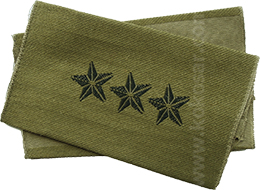
2nd COLONEL 2. PUKOVNIK Oberst II |
||
 |
||
|
LIEUTENANT COLONEL POTPUKOVNIK Oberstloytnant |
||
 |
 |
 |
|
MAJOR MAJOR Major |
||
 |
 |
 |
|
CAPTAIN KAPETAN Kapiten |
||
 |
 |
 |
|
1st LIEUTENANT PORUČNIK Løytant |
||
 |
 |
 |
 |
 |
|
|
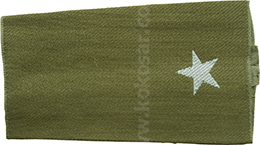
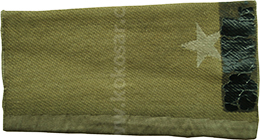
2nd LIEUTENANT PODPORUČNIK Fenrik |
||
|
Fenrik ili po NATO-u (OF-1) potporučnik (second lieutenant) se po funkciji drastično razlikuje od istog čina u drugim vojskama. Čin se stječe nakon jednogodišnjeg školovanja (izlaze s činom narednika) i služe kao narednici slijedeće tri godine. Iako je oficirski čin, u praksi vrši strogo podoficirske zadaće. Osobe s ovim činom su uglavnom bivši iskusni narednici bez oficirske škole i obično vrše dužnosti komandira odjeljenja i voda. To je jedna od posljedica ne postojanja podoficrskog kora u norveškoj vojsci.* |
||
 |
 |
 |
 |
||
|
A fenrik serves as a NATO (OF-1) second lieutenant, but the function of the rank differs drastically from other armies. The rank is obtained after attending befalsskolen for one year, from which the candidate emerges as a sergeant, and serving as a sergeant for three additional years. Although it is an officer rank, it strongly resembles an NCO rank in practice. Fenriks are usually former experienced sergeants without officer education, and usually fill such roles as squad leaders and platoon sergeants. This is due to the lack of an NCO-corps in the Norwegian Army.* |
||
|
SERGEANT NAREDNIK Sersjant |
||
 |
 |
 |
| 1955 - 1973 | ||
 |
 |
 |
|
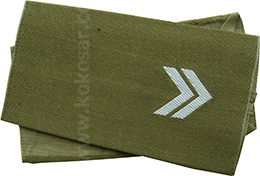
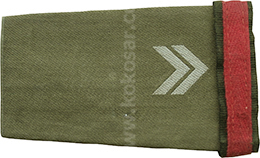
CORPORAL KAPLAR Korporal |
||
 |
 |
 |
 |
 |
 |
|
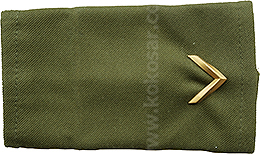
VICE CORPORAL PODKAPLAR Visekorporal |
||
|
Činovi podkaplara (Visekorporal/Visekonstabel/Vingsoldat) se obično daju vojnicima nakon duže službe i/ili izvrsne službe. Obično ga dobivaju vojnici sa više odgovornosti, kao na primjer vođe smjene u grupi stražara i slično. |
||
 |
 |
 |
|
The ranks of Visekorporal/Visekonstabel/Vingsoldat (Corporal/Leading Rate) are usually ascribed to soldiers with long and/or outstanding service, though may be bestowed on soldiers with extra responsibilities (e.g. the shift-commander among a group of soldiers on guard-duty). |
||
|
GRENADIER GRENADIR Grenader |
||
|
Čin Grenadira dobijaju vojnici koji su nakon dvanaest mjeseci služenja redovnog vojnog roka potpisali ugovor na jedan ili više trogodišnjih ugovora. |
||
 |
||
|
The ranks of Grenader and Matros are bestowed upon soldiers who have finished the 12 months compulsory service and have signed one or more three-year contracts to continue serving. |
||
|
CADETS PITOMCI |
||
 |
 |
|
| Befalsskoleelev | Befalsskoleelev | |
 |
 |
 |
| Sersjantkurselev | Sersjantkurselev | Sersjantkurselev |
|
CADETS - OLDER INSIGNIAS PITOMCI - STARIJE OZNAKE |
||
|
Oficiri i podoficiri na školovanju nose redovne oznake. Student i kadeti u vojnim školama, tehničkim školama i podoficirskim tečajevima nose slovo “S” na epoletama. Ovo se slovo postavlja po sredini epolete, tako da mu je donji rub četiri cm od ruba ramena. Na obadvije bočne strane epolete je nošena crvena traka (obrub). |
||
 |
 |
 |
|
Officers and NCO’s at schools wore insignia as normal. Students at OCS Schools, Technical College and NCO Courses wore insignias according to rank. OCS Schools students of one year, and upper class at schools of two years, wore a “S” on the shoulder strap. This “S” was mounted along the centre-line of the shoulder strap with its lower edge 4 cm from the shoulder seam. Along both edges of the shoulder strap a scarlet braid was worn. |
||
 |
 |
 |
|
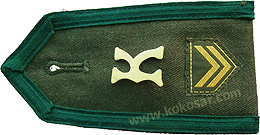
Pitomci podoficirskih tečaja nose oznake na epoletama kao i pitomci u srednjim školama samo što nose slovo “K” umjesto slova “S” i bočni rubovi epoleta su u zelenoj boji. Pitomci viših razreda tehničkih vojnih škola nose slovo “Y”. Oznake slova mogu biti srebrene ili zlatne boje, što ovisi o službi za koju se pripremaju. Rubovi epoleta su vezeni od pamuka. |
||
 |
 |
|
|
NCO course students wore distinctions according to the regulations for students at OCS Schools of one year, but with a letter “K” instead of “S” and with green braid. Students at Technical College at the three upper classes wore instead “S” letter “L”. The three letters “S”, “Y” and “K” were manufactured in both silvered and gild metal, and worn according to the metal color of the arm or service. All the braids had a width of 12 mm and were woven of cotton. |
||
|
METAL STARS FOR OFFICERS RANKS METALNE ZVJEZDICE ZA OFICIRSKE ČINOVE |
||
 |
 |
 |
 |
 |
 |
| Norveška nema uobičajeni podoficirski sistem pa su narednici svrstani sa oficirima u istu grupu: befal. Oficirski činovi su podjeljeni u tri grupe: četni oficiri (befal, od fenrika do kapetana) , štabne oficire (stabsoffiser, od majora do brigadira) i generale (od general majora do generala). | ||
| Norway does not have a NCO-system and thus Sergeant and Petty officer are grouped with the officers under the common designation befal. The officers are divided into three groups: The befal (company officers, ranks Ensign to Captain inclusive), the staff officers (stabsoffiser, ranks Major to Brigader inclusive), and the generals (Major General to General inclusive). | ||
| * Pozadina ovoga je da je 01. 07. 1975 godine, ukinut podoficirski kor, a stariji podoficirski činovi su prevedeni u oficirske tako da su viši narednici (oversersjant) dobili čin fenrika, štabni narednici poručnika, a po uredbi "Hærordningen av 1. januar 1977", najstariji štabni narednici su postali kapetani. | ||
| * The historical background for this is that Norway's NCO corps was discontinued on 1 July 1975, and the senior NCOs currently serving were given officer ranks. NCOs ranking as oversersjant were given the officer rank of fenrik, NCOs ranking as stabssersjant were given the rank of lieutenant, and - in accordance with "Hærordningen av 1. januar 1977" - the most senior of the NCOs ranking as stabsserjant were given the rank of captain. | ||
| Øivind Richard Makilla, 75 år med avdelingsmerker og gradtegn på uniform,printed in 2016 | ||
| Øivind Richard Makilla, Avdelingsmerker og gradtegn på uniform i Det norske forsvar 1940-1997, printed in 1997 | ||
|
Gradsnivåer og distinksjoner i det norske forsvaret (PDF); Forsvaret forum, 04.03.2002 |
||
ON TOP
 NA VRH
 |
||