
| COASTAL ARTILLERY |
| OBALNA ARTILJERIJA |
 |
 |
 |
 |
 |
 |
 |
 |
 |
 |
 |
 |
 |
 |
 |
 |
 |
 |
 |
 |
 |
| LINKS LINKOVI |
 |
 |
| OFFICIAL WEBSITE |
|
Obalana artiljerija je kao posebna grana norveške vojske osnovana 17. 06. 1899. godine. 1903. godine spajaju se sa kopnenim utvrdama i dobijaju naziv Tvrđavska artiljerija i tako ostaje do 1934. kada opet postaju samostalna grana jer se kopnena komponenta pretvara u Poljsku artiljeriju. 1957 opet posatju dio Mornarice i ostaju nen sastavni dio do formalnog „gašenja“ na ceremoniji koja se odigrala nakon 108 godina postojanja na dan osnivanja 17. 06. 2007. godine. |
||
   |
||
|
The Coastal artillery were established as an independent branch (våpenart) on 17. 06. 1899. In 1903 it was merged with land fortifications and was named Fortress Artillery. In 1934 the land fortresses transferred to Field Artillery and the name changed back to the Coastal Artillery. Meanwhile, the Coast Artillery taken out of the Army organization and moved to Marine Affairs. In 1957 the Coastal Artillery again become part of Navy. The Coastal Artillery was formally liquidated on 17. 06. 2007 in a ceremony at Oscarsborg Fortress on a day 108 years after the Coast Artillery was created as a separate våpenart. |
||
|
CSP BADGES OZNAKE ZA KAPE |
||
|
Obalna artiljerija kao dio i mornarice i kopnene vojske nije imala svoje posebne granske oznake, nego je korisila oznake obadvije grane. Na beretkama su se nosile obadvije značke, sidro sa krunom u krugu od užeta, tipično za mornaricu i pozlaćena značka kopnene vojske (model iz 1959). Na podoficirskim šapkama je nošena oznaka kopnene vojske, samo je dugme u sredini znaka umjesto lava bilo ono korišteno u artiljeriji. Oznake su nošene, sa izuzetkom onih za beretke do 1962 godine, kada je Obalna artiljerija počela nositi mornaričke uniforme. |
||
 |
 |
 |
| FIELD CAP AND BERETT | COASTAL ARTILLEY SGTs till 1962 | |
| Beret og feltlue 1965 | Kystartilleriet, sersjant til 1962 | |
| Beretke i radne kape ("šilterice") | Obalna artiljerija, narednici - do 1962. | |
|
The Coastal Artillery, being a subject to the both the Navy and the Army, has lead to that insignia for the Branch has no distinctive character, but shows traces of both Branches. With the beret, both the crowned anchor in the circle of rope, typical for the Navy, and the gilt beret badge for the Army of June the 1st 1959 is worn. Cap badge for peaked cap for NCOs is the same as for the Army, but the lion button is replaced with the button for the Artillery. These badges, with exception of those for the beret and field cap were worn until 1962, when the Coastal Artillery started wearing the same uniform as the Navy. |
||
|
TALLY-CAP BANDS TRAKE SA MORNARIČKIH KAPA |
||
|
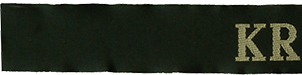
Kao i mornari i pripadnici obalne artiljerije nose trake na svojim kapama. Na trakama su ispisani nazivi utvrđenja, tvrđava, jedinica ili škola. Iznad trake se nose kokarde promjera 20 mm. Uz ljetne uniforme, kape sa bijelim pokrovom, nosi se metalni znak, a uz zimske platneni. I kod ovih traka je vladalo prilično šarenilo. Od materijala od kojeg su izrađene (svila, najlon itd). I boje slova su varirale od tamne do svijetle. Izgled slova je bio različit, i to ne samo od utvrde do utvrde nego i u samim jedinicama (kao i u mornarici). |
||
 |
||
   |
||
   |
||
   |
||
   |
||
   |
||
   |
||
   |
||
   |
||
   |
||
|
Like the Navy, the Coastal Artillery wore cap tallies with their caps, denoting the name of fortifications, fortresses, units and schools. Above the cap band a cocade with diameter of 20 mm was worn. With the white cop cover for summer uniform they wore a cocade in metal. Concerning the cap tallies, they varied just as much as they did in the Navy. The oldes are woven in the silk, and the latest are maden of nylon. The colors of the lettering ranges from dark yellow to pale yellow. Further, the typography shows a great deal of variations, not only from fortress to fortress, but also in the same units, just like with the navy. |
||
|
OTHER INSIGNIAS OSTALE OZNAKE |
||
 |
 |
 |
| COLAR INSIGNIA | ||
| Krageemblem befalselever U/befal BSKA | ||
| Oznaka za rever | ||
|
COASTAL REPORTING SERVICE OBALNA SLUŽBA OSMATRANJA |
||
|
Specijalistička oznaka, koja se sastoji od dva ukrštena stara dvogleda, je nošena 10 mm ispod dna širita. Za mornare je bila ušivena 10 mm ispod sidra. U početku su postojala tri čina u ovoj službi i to: Kystvaktformann, Kystvaktvaramann i Kystvakt („čuvar obale”), što je kasnije promijenjeno u Kystmelde (Obalni dojavljivač). I za ovu službu su izrađivali oznake od samolejpivog vinila, štampane crvenom bojom na tamnozelenoj podlozi, a nosile su na radnim uniformama, iznad lijevog prsnog džepa. Kasnije su oznake izrađivane kao i za ostatak mornarice, na navlakama za epolete. |
||
 |
 |
 |
| Kystmeldeformann | Kystmeldevaramann | Kystmeldemann |
|
The specialty mark, consisting of two crossed long-glasses, was worn 10 mm below the point of the chevron. For Seamen it was worn 10 mm below the anchor. In the beginning, the designations for these three ranks were: Kystvaktformann, Kystvaktvaramann and Kystvakt (Coastal Guard) was altered to Kystmelde (Coastal Report). These rating badges were also made in field editions on self-adhesive vinyl in the same sizes as for the Navy and Coastal Artillery. The badge was printed in red on olive-green background, and worn with the field uniform, above the left breast pocket. Later, the insignia for sleeves have been manufactured in one piece, and as miniature slip-ons like with the rest of the Naval Forces. |
||
| Øivind Richard Makilla, 75 år med avdelingsmerker og gradtegn på uniform,printed in 2016 | ||
| Øivind Richard Makilla, Avdelingsmerker og gradtegn på uniform i Det norske forsvar 1940-1997, printed in 1997 | ||
ON TOP
 NA VRH
 |
||